
Exploitation Films (1930s to the 1950s)
For three decades, from the early 1930s into the 1950s, a shadow cinema flourished just beneath Hollywood’s polished surface. These were the “exploitation films”: cheap, independently produced pictures that sold the very vices mainstream Hollywood was forbidden to touch. In this era, the word “exploitation” referred not to a genre but to a method that exploited a taboo subject (from drug addiction to venereal disease) for ticket sales.
The Scare Film
The most recognizable strain was the “scare” or “hygiene” film, which claimed to educate while actually titillating. The formula was simple: dramatize a forbidden subject in lurid detail, then tack on a moralizing finale. The definitive example is Reefer Madness (1936), originally shot as Tell Your Children. It portrays marijuana as a demonic force that transforms clean-cut teenagers into murderers, rapists, and suicides within a single puff.
Similar titles—Marihuana: Weed with Roots in Hell (1936), Cocaine Fiends (1935), and Sex Madness (1938)—promised stern warnings against drug use, premarital sex, and venereal disease while lingering on the very behavior they claimed to condemn. The message was secondary; the spectacle was the point.
The Hays Office Paradox
What made these films so odd was the timing: they flourished in the very era of the Hays Office. From 1934 onward, the Production Code Administration, enforcing the Motion Picture Production Code under Joseph Breen, rigorously policed every frame released by the major studios. Drug use, sexual passion, “perversion,” and nudity were simply off-limits, and big-studio films were sanitized accordingly.
The irony was glaring. The Hays Office could regulate only studios that belonged to the MPPDA and submitted their films for the Code’s seal of approval. Fly-by-night and low-rent independent producers simply ignored the system.
They shot exploitation pictures outside the studio system, never sought the seal, and booked their films into grindhouses, roadshows, and small-town theaters on their own terms. The Code didn’t eliminate forbidden content so much as push it out of the mainstream and into an exploitation underground, where scandal itself was the chief selling point.
Showmen and Distribution
Exploitation producers such as Dwain Esper and Kroger Babb operated less like filmmakers than like carnival barkers. Babb’s Mom and Dad (1945), a venereal-disease and childbirth picture, toured for years with a live “hygiene lecturer,” segregated audiences by sex, and a “square-up” reel that restored moral order after the explicit footage. Local censorship bans were not setbacks but free publicity, trumpeted on posters as “banned” or “adults only.”
Legacy
In hindsight, these exploitation films prove the Hays Office’s moral authority was never total. While the majors practiced restraint, unscrupulous filmmakers built a parallel, scandalous cinema from the very topics Hollywood was forbidden to show. This was a paradox that helped lay the groundwork for the Code’s eventual collapse.
Flaunt This Exploitation Film on High-Quality Merch

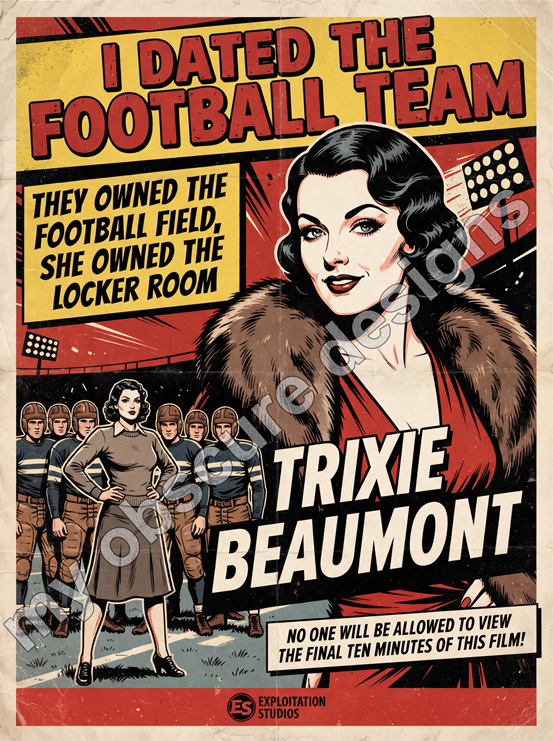
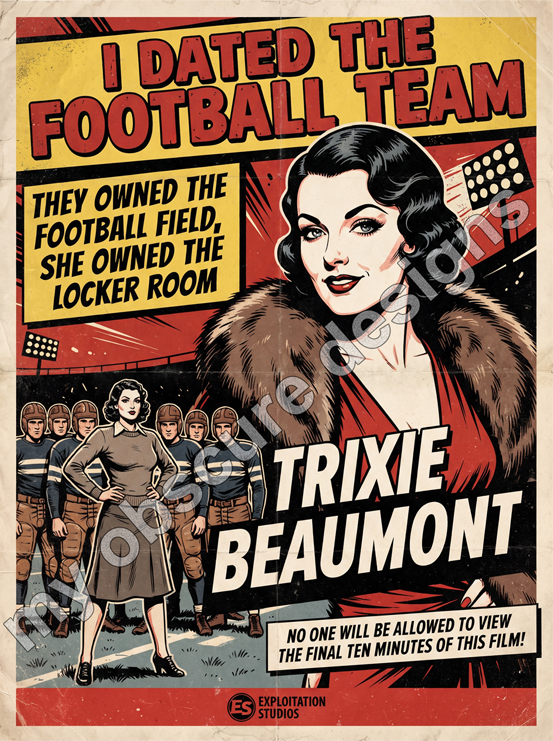
The film “I Dated The Football Team” isn’t real. However, the title is only slightly more suggestive than many real titles that were produced. Enjoy this nod to this little known era of filmmaking. And of course, always insist the film is real if anyone asks you about it.
“I Dated The Football Team” High-Quality Merch Here (More Than 50 Choices).