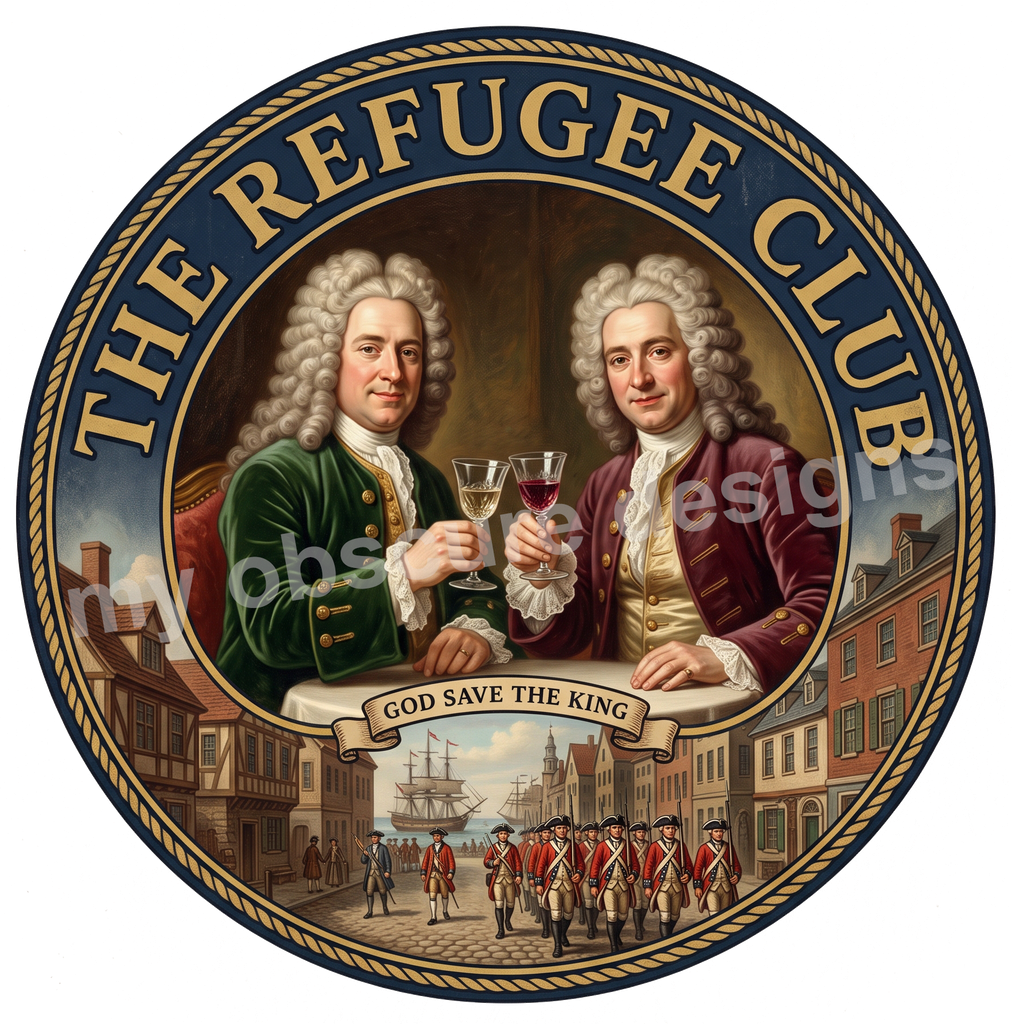
When the British captured New York City early in the American Revolution, Americans loyal to England flocked to the British safe haven of NYC. Known as loyalists (or tories), some of them formed “The Refugee Club.” At first, it was just a glorified drinking club for affluent loyalists. Later, however, the club became part of loyalist raids by Americans who were actively fighting for the British side.
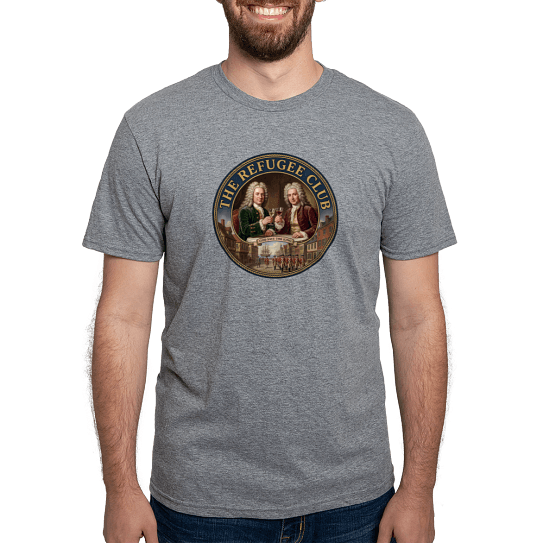
For history buffs, this artwork represents a glimpse of a forgotten chapter of American history. Wear it around and be ready for the questions! Find a wide variety of products that sport this colorful artwork. They’re all available right here. Or, peruse dozens of other amazing designs on high-quality merch. Just go here.
Loyalists in the American Revolution
American Loyalists (colonists who remained faithful to the British Crown during the American Revolution) made up nearly 1/3 of the colonial population. They were not a single bloc. They included royal officials, Anglican clergy, merchants tied to imperial trade, tenant farmers suspicious of local Patriot elites, frontier settlers who relied on British protection, and enslaved African Americans who accepted British offers of freedom in exchange for military service.
For many, loyalism was less a grand ideology than a pragmatic or conservative choice. They believed the Crown offered order, stability, and legitimate authority in a time of enormous upheaval. They also assumed that a rag-tag army of colonists couldn’t possibly win against the greatest military power on the planet.
Dispossession and the New York Sanctuary
As the Revolution intensified, Patriots increasingly treated Loyalists as traitors. Revolutionary committees demanded public oaths of allegiance; those who refused faced fines, imprisonment, property seizure, and violence. State governments passed confiscation acts that stripped Loyalists of their estates and farms to help fund the war. This created a refugee crisis. Thousands of Loyalists fled to British-controlled enclaves, especially New York City. After the British seized New York in 1776, the city became the main Loyalist sanctuary. Its wartime population swelled with refugees from across the colonies.
Many of these Loyalists were essentially trapped in British-occupied New York City because their homes were often confiscated by the rebels. They could not safely return to their old communities, yet they also lacked the resources to relocate elsewhere. They crowded into damaged housing, relied on British military supplies, and waited anxiously for a British victory that never came.
Some loyalists in NYC were quite wealthy. The Refugee Club, sometimes advertised in Rivington’s Royal Gazette (a loyalist newspaper printed in NYC), offered a chance for these men to gather and socialize.
Fighting for the Crown
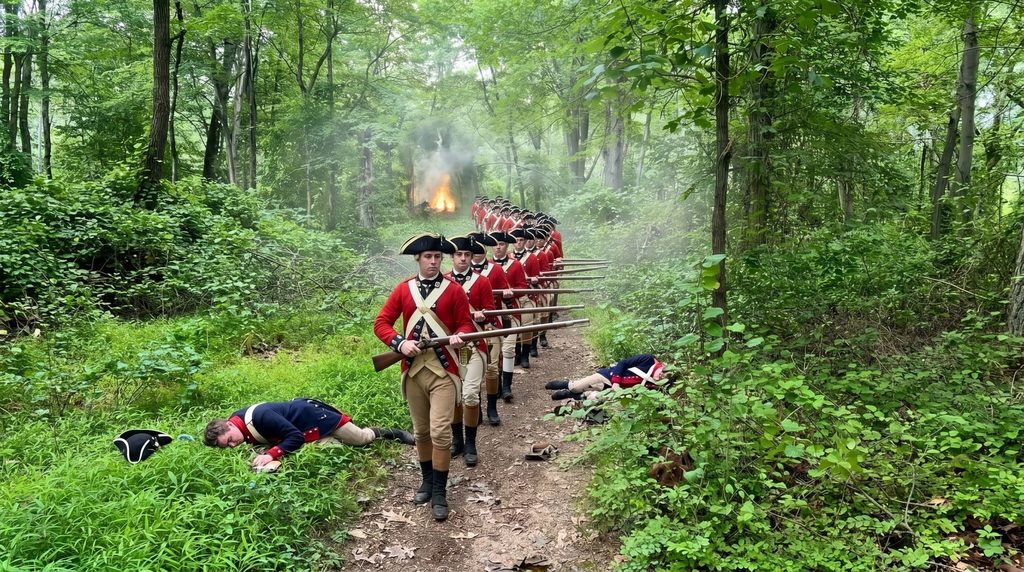
Many loyalists, however, were not simply passive refugees. More than 19,000 enlisted in provincial regiments such as the Loyal American Regiment and the Queen’s Rangers, serving as soldiers, scouts, and raiders. Others provided intelligence, guided British forces, or worked as civilian contractors. Still, their position was precarious.
British officers sometimes distrusted Loyalist troops, and Patriots despised them as “Tories.” In the southern backcountry and along the frontier, the war often became a brutal civil conflict between neighbors.
Defeat, Exile, and Legacy
The British surrender at Yorktown in 1781 shattered Loyalist hopes. The 1783 Treaty of Paris recommended that the states restore confiscated Loyalist property, but that recommendation was largely ignored. During the British evacuation of New York in 1783, thousands of Loyalists departed. Overall, an estimated 60,000 to 80,000 Loyalists left the new United States.
Many settled in Nova Scotia, New Brunswick, Quebec, and Ontario, where they helped shape Canada’s political culture. Others went to Britain, the Bahamas, or the West Indies. Black Loyalists, formerly enslaved people who had gained freedom through British service, founded communities in Nova Scotia, though they often faced discrimination and hardship. A British commission heard compensation claims, but awards only partially covered their losses.
Loyalists became an early American diaspora. Their experience revealed the Revolution’s deep divisions. In fact, not all colonists embraced independence, and for those who chose the Crown, the war often meant dispossession, exile, and the painful cost of loyalty. The Refugee Club artwork above is a reminder that some Americans who took a bold stance and paid the ultimate price for it.