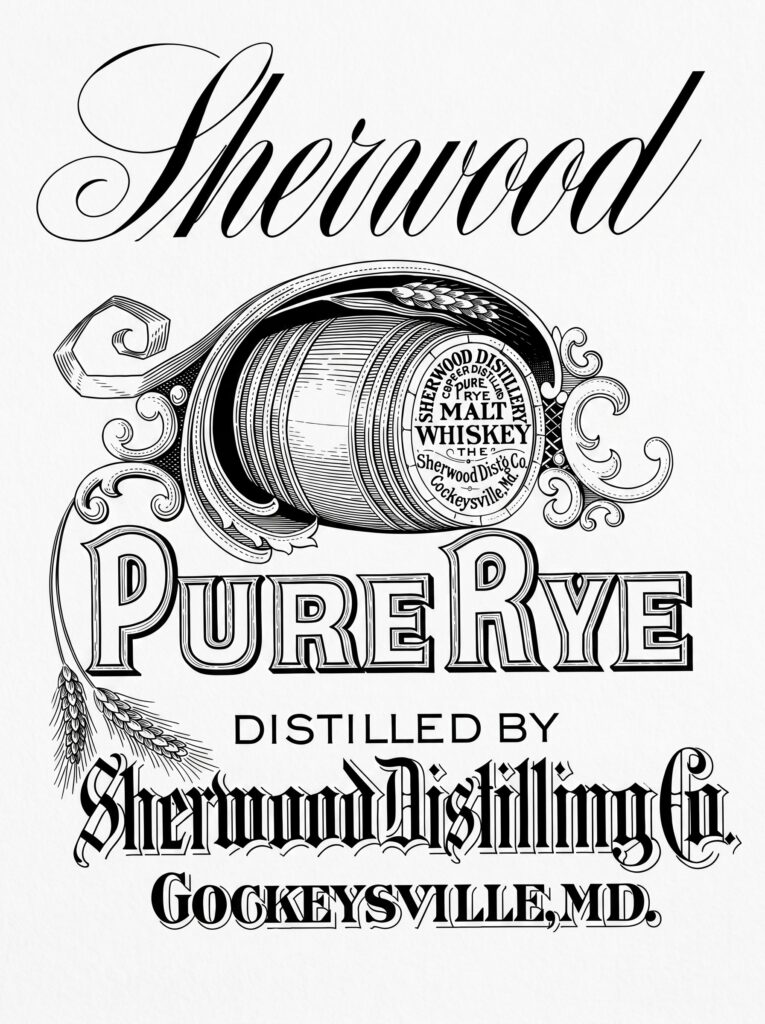
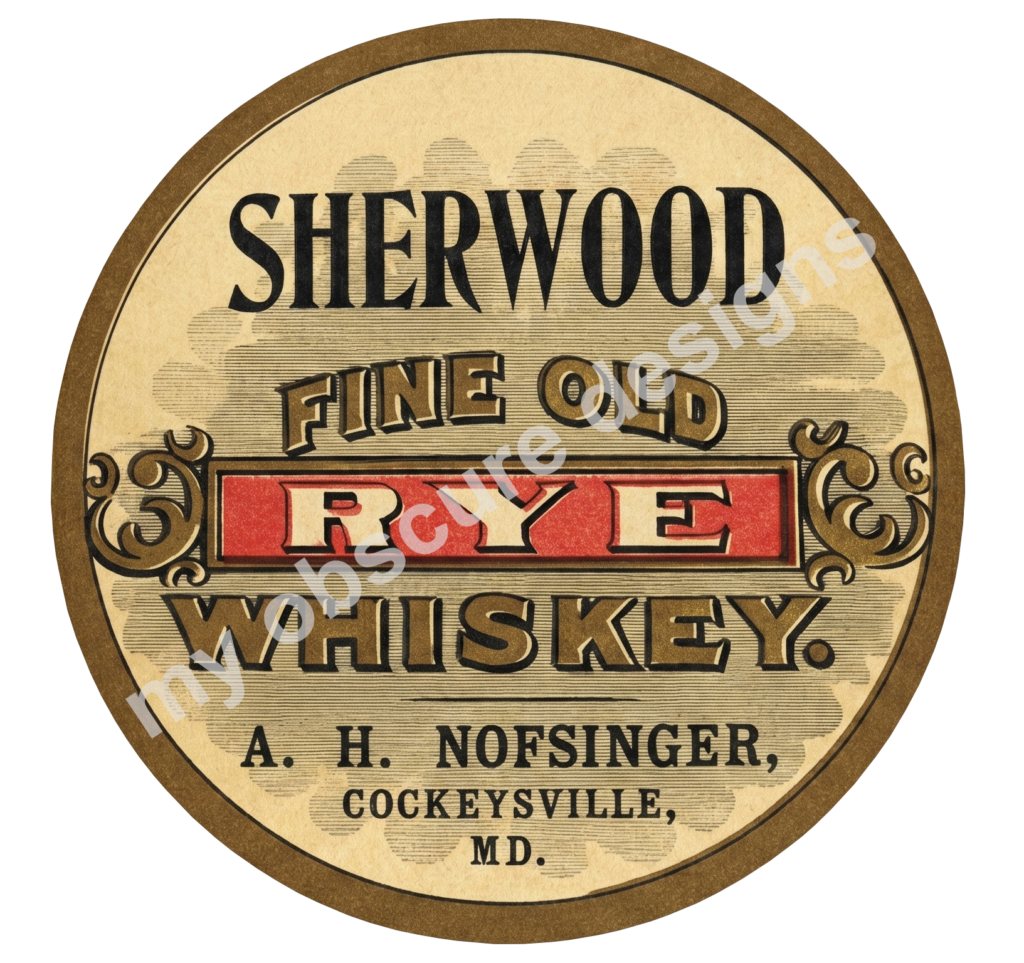
Sherwood Rye Whiskey is a long-gone distillery once located in Cockeysville, Maryland. Now, you can put this rare label on your own merch.
Peruse a wide variety of products that you can purchase right here featuring the Sherwood Rye Whiskey label. Or choose from dozens of other designs.
History of Sherwood Rye Whiskey
The Sherwood Distillery in Cockeysville, Maryland, is best remembered as the home of Sherwood Rye Whiskey. Its years in Cockeysville, from the late 1800s to the post-World War 2 years, marked the final major chapter for one of Maryland’s historic straight rye brands.
19th-Century Origins
Sherwood Rye Whiskey was first produced in the late 1800s near York Road and Ashland Road in Cockeysville, Maryland. Using local rye and water from the Gunpowder Falls watershed, the distillery produced a traditional Maryland straight rye that became known as Sherwood Pure Rye. The whiskey earned a strong regional reputation before Prohibition. Once Prohibition was in place, the distillery closed. Fortunately, the brand would be revived after Prohibition ended in 1933.
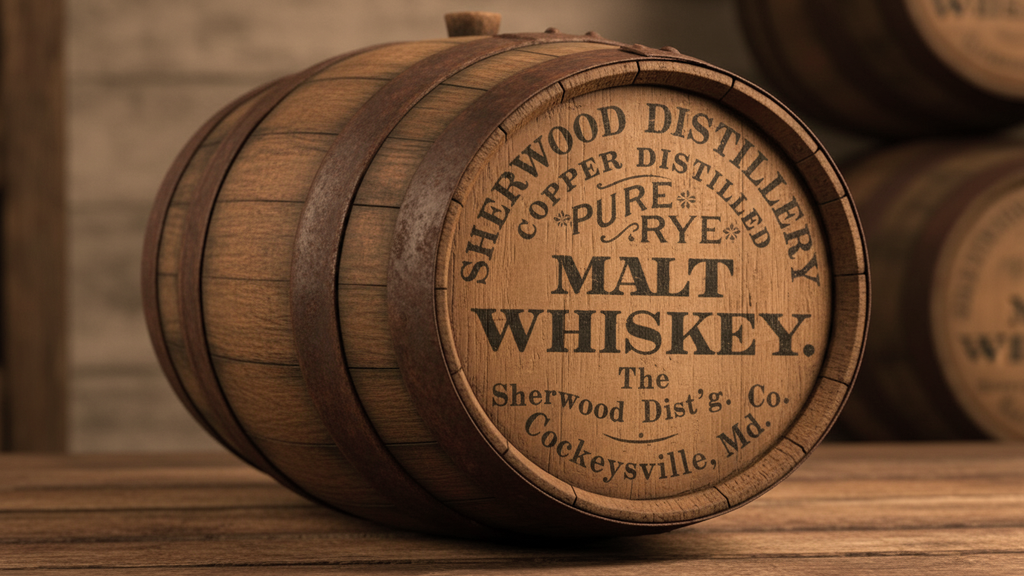
The Cockeysville Years (Late 19th Century/Early 20th Century)
The Sherwood Distilling Company established a newer facility in Cockeysville shortly after Prohibition ended. From the beginning, Cockeysville had always offered clear advantages to the distillery: the Northern Central Railroad provided shipping access to Baltimore and eastern markets, and the area supplied clean water suited to distilling. The company built a modern plant off York Road.
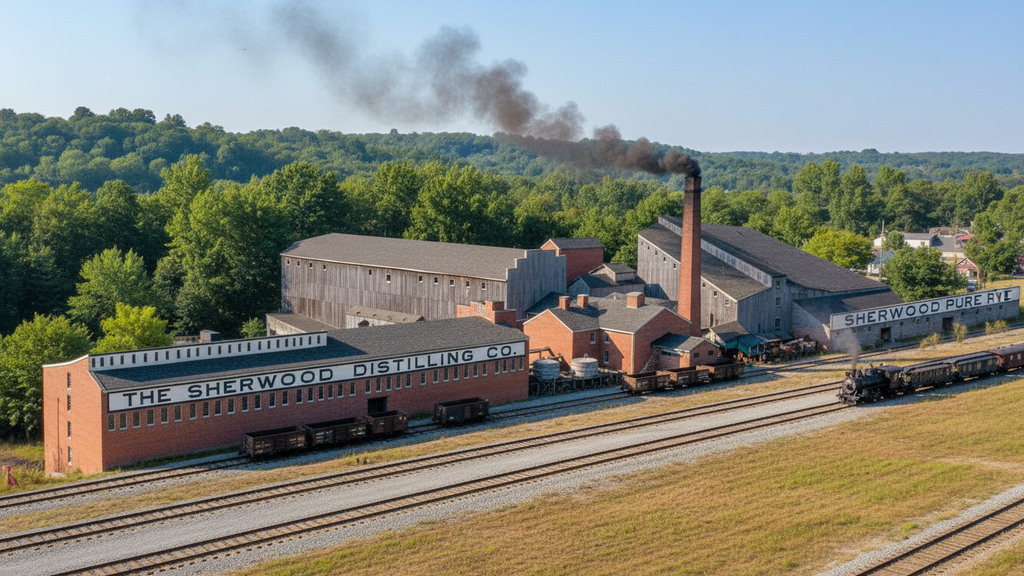
Sherwood Rye was made in the classic Maryland manner, using a rye-dominant mash bill with corn and malted barley. The whiskey was aged in charred new oak barrels and often released as bottled-in-bond at 100 proof. During World War II, like many American distilleries, Sherwood temporarily produced industrial alcohol for the war effort.
The distillery reached its peak in the late 1940s and early 1950s. Sherwood Rye was distributed along the East Coast and competed with other Maryland ryes such as Pikesville and Baltimore Pure Rye. The Cockeysville distillery wound up moving to Westminster, Maryland. However, things were changing and the whiskey was soon to become just a memory.
Decline and Legacy
By the late 1950s and 1960s, consumer tastes shifted toward bourbon, blended whiskeys, and lighter spirits. Maryland’s rye industry contracted sharply, and Sherwood’s production slowed and finally disappeared. The post-Prohibition distillery building in Cockeysville no longer survives. Today, surviving bottles of Sherwood Rye from the Cockeysville distillery are prized by collectors as reminders of Maryland’s once-dominant straight rye tradition and of the Sherwood family’s distilling roots in the late 19th century.