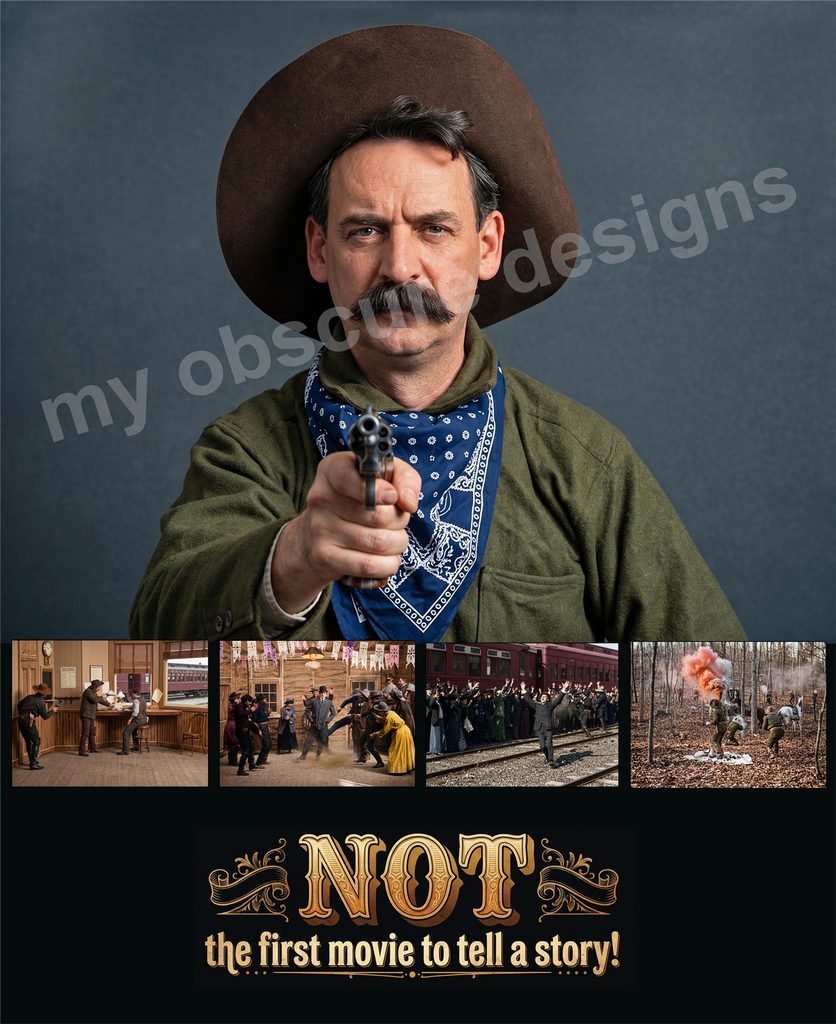
Impress your enemies and annoy your friends with your knowledge of early cinema. And nothing does that better than this design from My Obscure Designs. Maybe you’d like to be seen with it on one of these fine products:
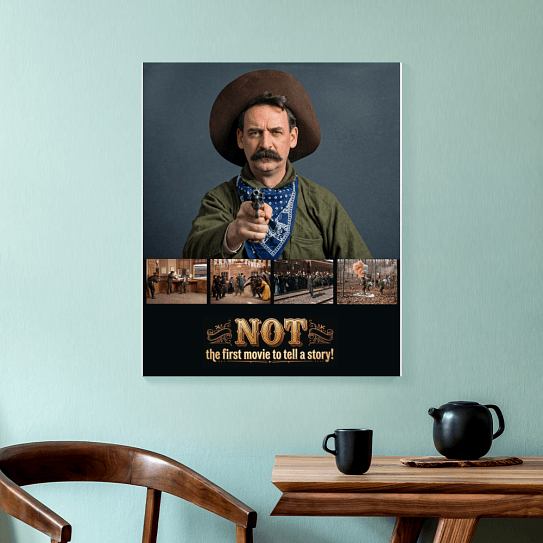
What The Great Train Robbery Is
Released in late 1903, The Great Train Robbery is a 12-minute silent Western directed by Edwin S. Porter for the Edison Manufacturing Company. Spread across 14 distinct scenes, we see the following: bandits knock out a telegraph operator, rob a train’s mail car and passengers, and escape with the loot.
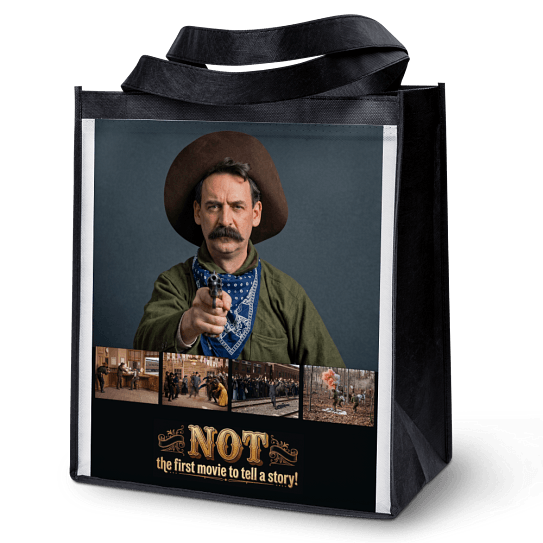
A posse soon pursues them, and a final gunfight kills the outlaws. The film ends with its most famous shot: a bandit firing a revolver straight at the camera.
Where and How It Was Made
Porter shot interiors at Edison’s New York studio and filmed exteriors on location in New Jersey, along the Delaware, Lackawanna and Western Railroad and in Essex County Park.
The famous mail car scene, with scenery rushing past the door, used double exposure (rare for American cinema at the time). Some prints were hand-tinted, and Porter cut between parallel actions to build suspense through editing.
Why The Great Train Robbery is Celebrated
The Great Train Robbery is often called an early blueprint for modern cinema. It tells a complete story with a beginning, middle, and end, uses editing to advance the plot, and is widely considered the first Western. Its commercial success helped film move from novelty to storytelling medium.
But It Wasn’t the First
It didn’t invent narrative film. Not even close. Georges Méliès told complete, multi-scene stories in Cinderella (1899) and A Trip to the Moon (1902). Britain’s “Brighton School” cut between shots for suspense in Fire! (1901) and Stop Thief! (1901). Ferdinand Zecca’s Histoire d’un crime (1901) told a full crime story, and Porter’s own The Life of an American Fireman (1903) came first.
So The Great Train Robbery deserves respect, but not for being the first story on film. It popularized techniques that Méliès, Williamson, Smith, and Zecca had already pioneered. It stands as a milestone, not a beginning.