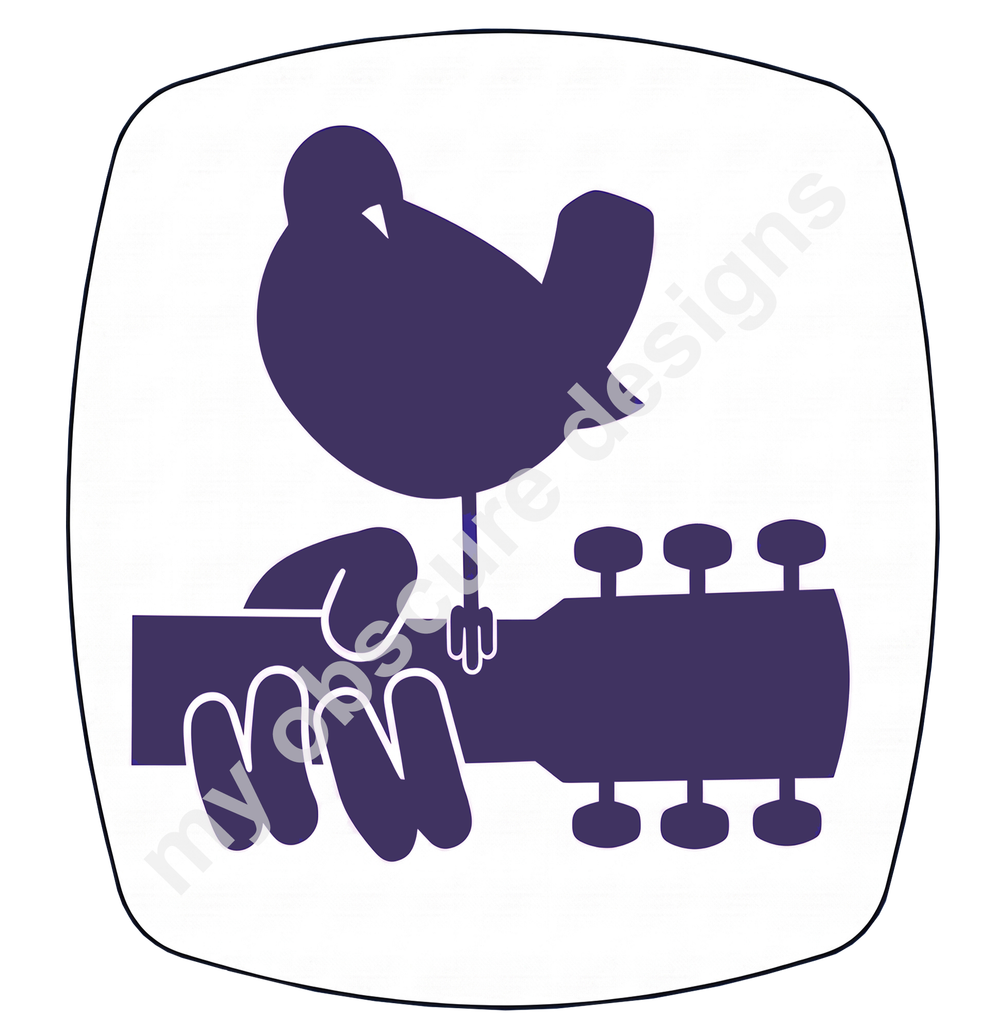
If you were part of the crew for the famous 1969 Woodstock Music and Arts Festival, you were probably wearing this design on a dark blue t-shirt while you were there (with the word “Crew” on the back). This rare t-shirt is visible several times in the Woodstock documentary film.
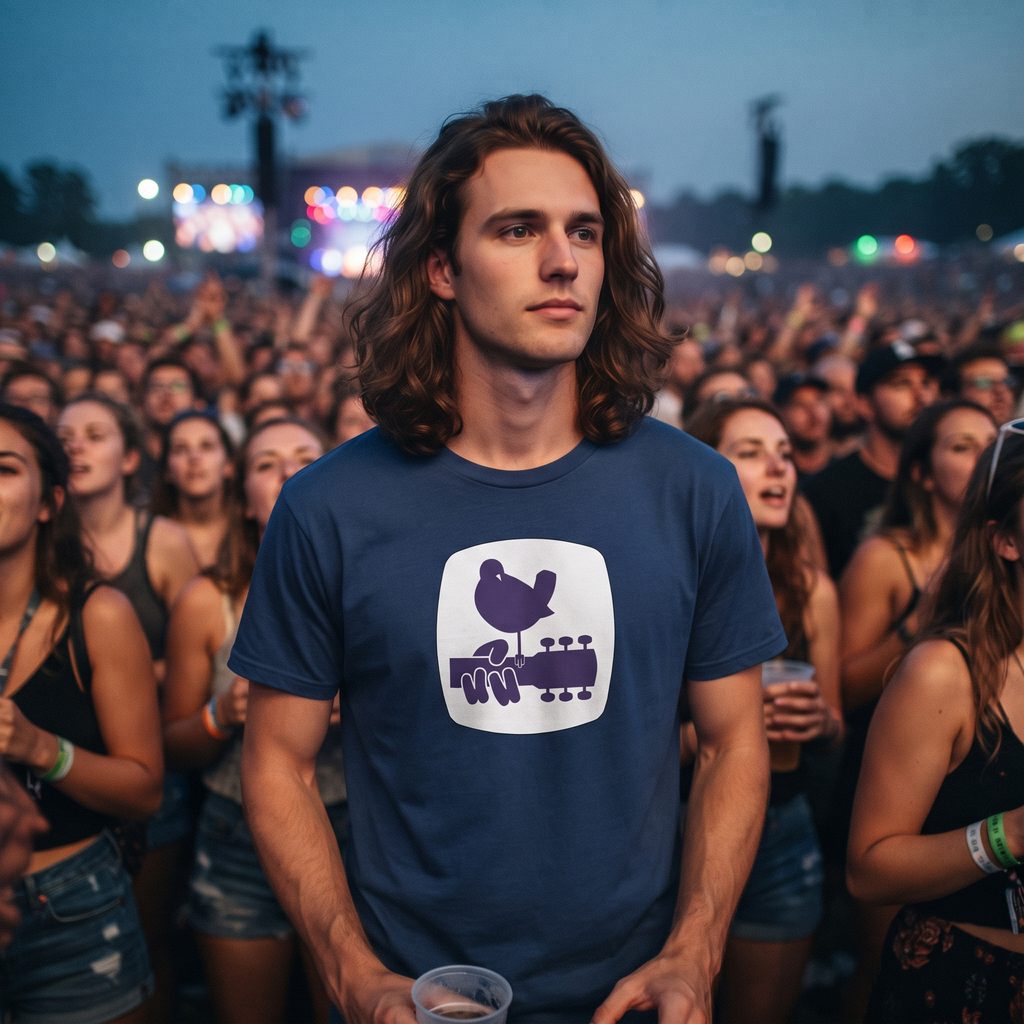
Now you can wear this rare Woodstock crew t-shirt design on a wide variety of products available right here. Or, peruse dozens of other out-of-the-ordinary designs by going here.
History of the 1969 Woodstock Festival
The Woodstock Music and Art Fair, held August 15–18, 1969, became the defining event of the 1960s counterculture. Though billed as “An Aquarian Exposition: 3 Days of Peace & Music,” it took place not in Woodstock, New York, but on Max Yasgur’s 600-acre dairy farm near Bethel, about 43 miles southwest of the town whose name it borrowed.
Planning and Chaos
Organized by four young promoters (Michael Lang, Artie Kornfeld, Joel Rosenman, and John Roberts), the festival was planned as a for-profit concert expected to draw perhaps 50,000 to 100,000 people. Instead, an estimated 400,000 to 500,000 arrived, overwhelming roads, food supplies, water, and sanitary facilities. Traffic jams stretched for miles, and many attendees simply abandoned their cars and walked to the site. When crowds far exceeded capacity, fencing was trampled, and organizers were forced to declare it a free event.
The weather turned Woodstock into a muddy ordeal. Rain fell intermittently throughout the weekend, drenching the crowd and turning the hillside into a sea of mud. Food was scarce, but local residents, churches, and volunteer groups organized emergency deliveries. A U.S. Army medical team and doctors from the countercultural Hog Farm commune treated injuries, bad drug trips, and illnesses. Remarkably, despite the chaos, no major violence occurred.
The Music
Musically, Woodstock featured some of the era’s greatest acts. Richie Havens opened with an improvised set after other performers were delayed. Over three days, the crowd heard amazing musical talent, including Joan Baez, Santana, Janis Joplin, Sly and the Family Stone, The Who, Jefferson Airplane, Joe Cocker, and Crosby, Stills, Nash & Young. Jimi Hendrix famously closed the festival on Monday morning with a legendary set that included his feedback-drenched rendition of “The Star-Spangled Banner,” a soundscape often interpreted as both protest and patriotism.
Woodstock’s Legacy
Woodstock became a symbol of the hippie ideal, peace, love, music, and community on a massive scale, while also exposing the logistical fragility of such gatherings. It was documented in an Academy Award-winning 1970 film and soundtrack album, cementing its mythology.
Though the festival left its promoters deep in debt initially, it ultimately became a cultural landmark. The site is now home to the Bethel Woods Center for the Arts, preserving the memory of a weekend that briefly seemed to prove a generation could gather peacefully despite sometimes challenging circumstances.