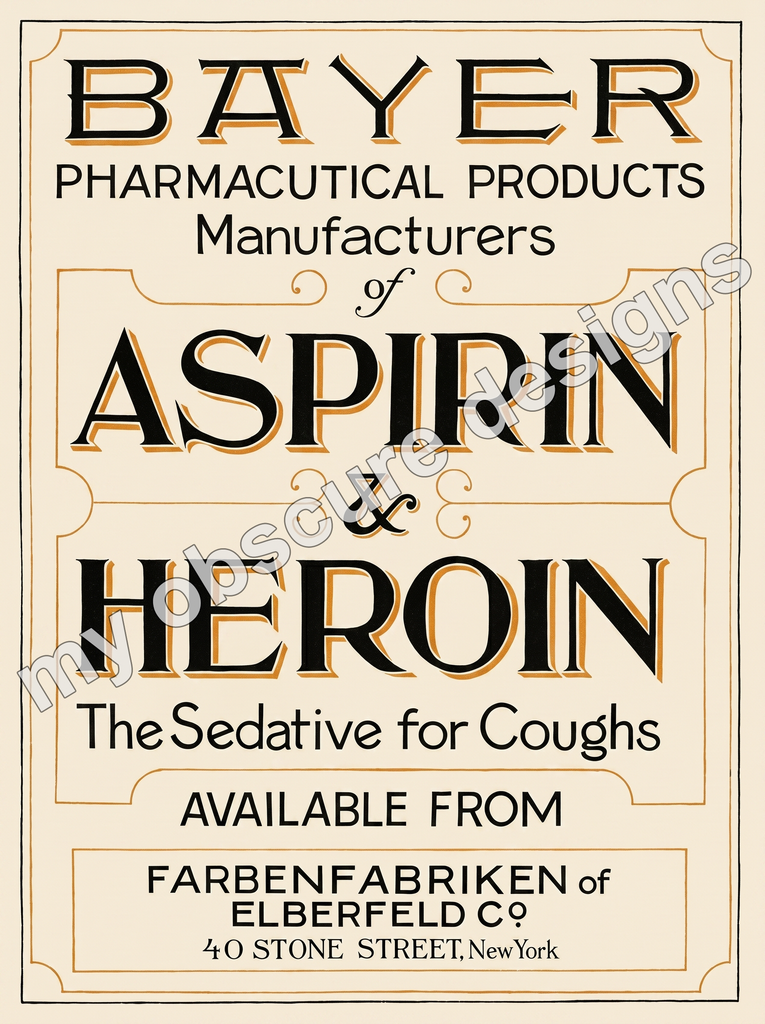
At one time in the U.S., heading down to the drug store for some heroin was perfectly legal. Many people did so, and many became hopelessly addicted. Now, you can sport this bold ad and make people wonder about your intentions.


You can peruse more products with the Bayer heroin drug ad design if you go here. For dozens more of our unique designs, head over to here.
A History of Legal Heroin Drug Use in the U.S.
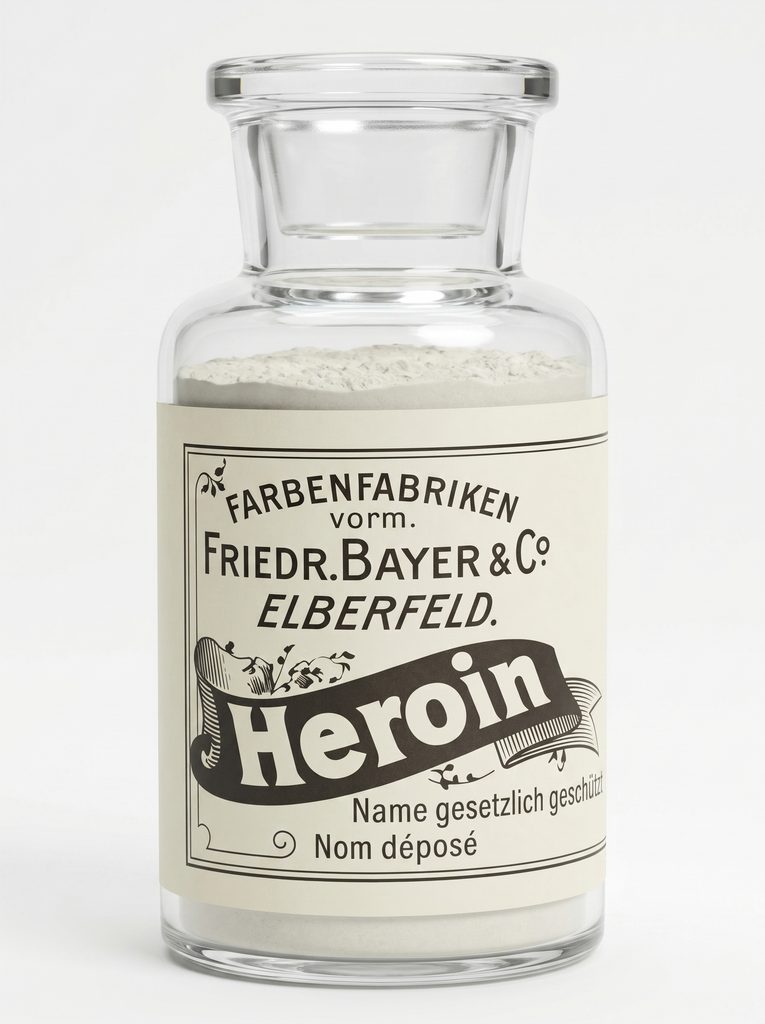
In the late nineteenth and early twentieth centuries, heroin was not seen as a dangerous street drug but as a promising medical breakthrough. First synthesized in 1874, heroin was commercialized in 1898 by the German pharmaceutical company Bayer, which trademarked the name “Heroin” and marketed it as a non-addictive substitute for morphine and codeine.
Bayer promoted heroin primarily as a cough suppressant and respiratory remedy, claiming it was effective for bronchitis, tuberculosis, pneumonia, asthma, and painful coughs. It was sold over the counter in powder, tablet, and liquid form, and physicians widely recommended it, believing it to be safer than other opiates.
Heroin Drug Ads Everywhere
Bayer was far from alone. Many American pharmaceutical firms soon incorporated heroin into proprietary medicines. Heroin appeared in a wide range of products, including cough syrups, lozenges, pastilles, elixirs, water-soluble powders, and tablets. Some preparations, such as “Glyco-Heroin,” mixed heroin with glycerin and sugar to make it more palatable. Heroin was also added to asthma powders, bronchitis cures, catarrh remedies, and even children’s “soothing syrups” for teething and croup.
In many cases, manufacturers did not clearly label the narcotic content, and consumers could purchase these remedies at pharmacies or through mail-order catalogs without a prescription. Advertising often emphasized heroin’s supposed safety and effectiveness, and many people used it daily without understanding its addictive potential.
The Shift toward Prohibition
Over time, however, physicians and reformers began to recognize that heroin was highly habit-forming. Users developed tolerance and withdrawal symptoms, and reports of “heroin addiction” grew. The Pure Food and Drug Act of 1906 required manufacturers to list opiates on labels but did not ban them.
The Harrison Narcotics Tax Act of 1914 imposed stricter federal controls, requiring prescriptions and records for heroin distribution, effectively criminalizing nonmedical use. Still, heroin remained available by prescription for several years.
By the early 1920s, medical opinion shifted decisively against heroin. Organizations such as the American Medical Association argued that heroin offered no unique therapeutic advantage over other opiates and carried exceptional addiction risk. In 1924, Congress passed the Anti-Heroin Act, banning the importation, manufacture, and possession of heroin in the United States (even for medical use).
This marked the end of heroin as a legitimate medicine and set the stage for its later classification as a Schedule I controlled substance with no accepted medical use. Heroin drug ads like the one above quickly became a distant memory. Now, you can revive this crazy era by proudly displaying this ad on a variety of high-quality items. Just go here.