
Located at Soldiers Delight, Maryland, the Choate Mine trail is available for hikers so that they have a chance to experience a unique aspect of little known history and remarkably rare geology.
Proudly wear this logo on your next hike. Peruse a complete line of high-quality Choate Mine Trail products that you can purchase here. Or, check out dozens of other one-of-a-kind designs by going here.
History of Choate Mine at Soldiers Delight, Maryland
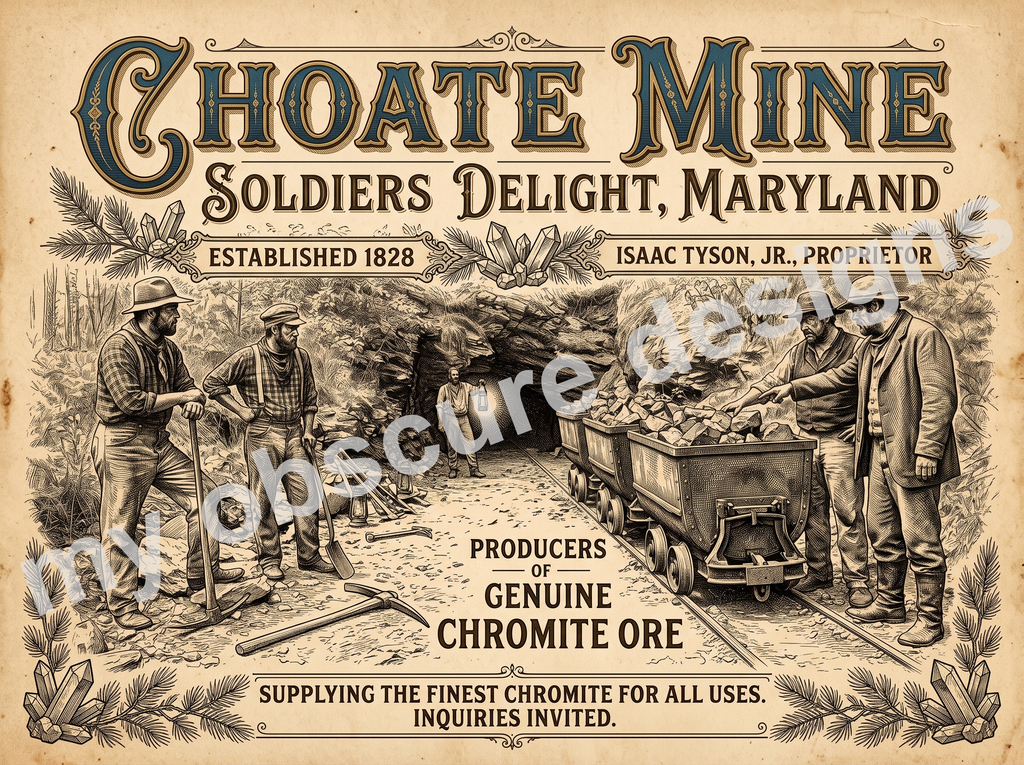
Choate Mine is one of the historic chromite workings at Soldiers Delight, a serpentine barrens in Baltimore County, Maryland, northwest of Owings Mills. The site represents an important but little-known chapter in early American mining and industrial history, when Maryland briefly supplied a significant share of the world’s chromium.
Soldiers Delight is underlain by serpentinite, a rock formed from ancient oceanic crust. The weathering of this unusual rock created the Soldiers Delight serpentine barrens, a harsh and mineral-rich landscape that supports rare plant species. More importantly for nineteenth-century miners, the serpentinite contained chromite, the ore of chromium. Chromite was valued for making chromium-based pigments, chemicals for leather tanning, and later as an alloying metal for steel.
The Beginnings of the Choate Mine

The discovery of chromite at Soldiers Delight is credited to Isaac Tyson, Jr., a Baltimore mineralogist and entrepreneur. Around 1827, Tyson identified chromite in the serpentine rocks of the area. Recognizing its commercial potential, he acquired mineral rights and began mining operations. Tyson eventually controlled a large portion of the world’s chromite supply before larger overseas deposits were discovered. Soldiers Delight became the center of Maryland’s chromite industry, with many small mines and prospects scattered across the barrens. Choate Mine was one of these workings.
Choate Mine took its name from the Choate family, who were early landowners in the area. Like most chromite operations at Soldiers Delight, it was not a large modern mine. It consisted mainly of open cuts, trenches, and shallow shafts that followed pods and lenses of chromite within the serpentinite. Miners used hand tools, black powder, and horse-drawn wagons to extract and haul the ore.
After extraction, the chromite was sorted by hand and sent to Baltimore for processing or shipment. During the peak years of the 1830s and 1840s, the mines at Soldiers Delight, including Choate Mine, produced thousands of tons of chromite ore. However, detailed production records for individual mines are scarce, and Choate Mine’s exact output is not well documented.
Mining at Soldiers Delight began to decline by the 1860s. The richest and most accessible chromite bodies had been depleted, and larger, cheaper foreign deposits began to dominate the market. The small, scattered Maryland operations could not compete, and Choate Mine, like many others, was abandoned. Its pits and shafts gradually filled with debris and water, and the site lay quiet for decades.
Choate Mine in the 20th Century
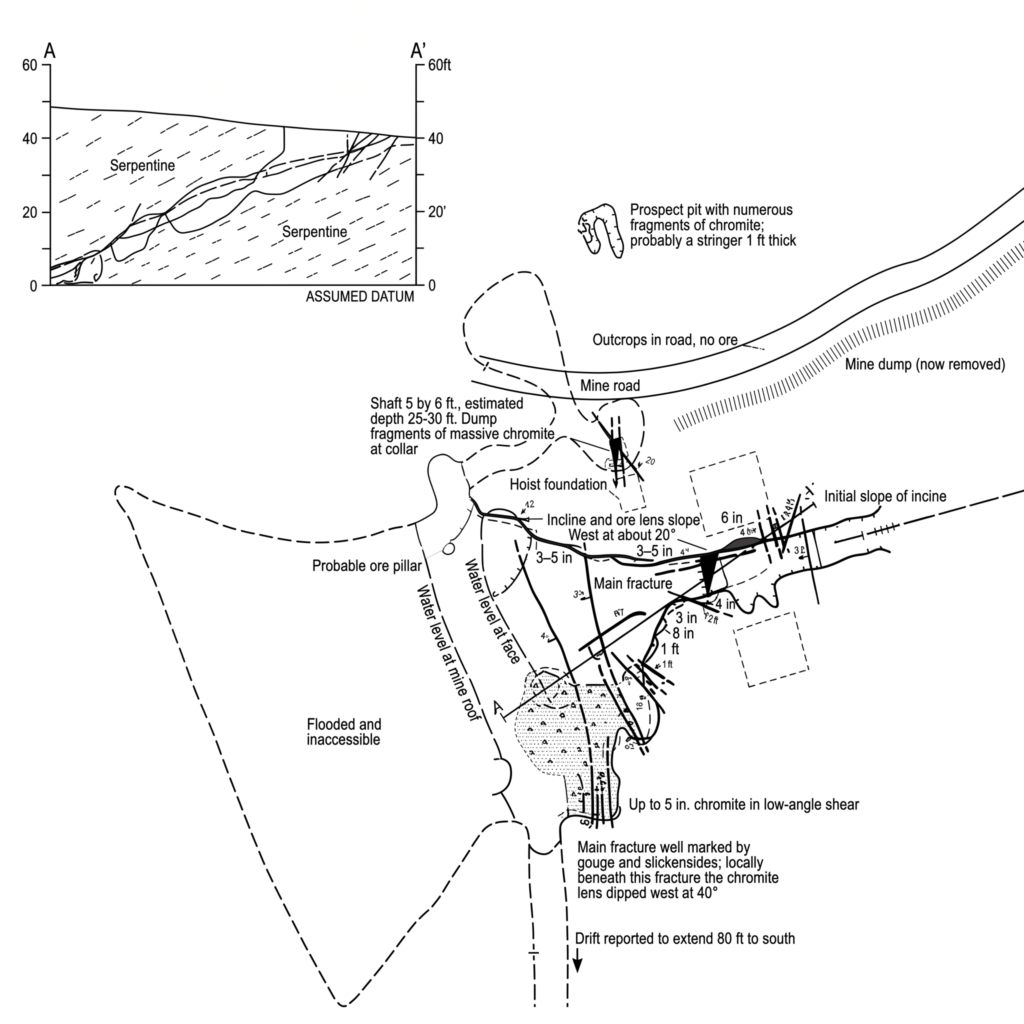
There were brief periods of renewed interest in the early twentieth century. During World War I, chromium became a strategic material for steel alloys and munitions. Federal and state geologists reexamined the old chromite workings at Soldiers Delight, and some may have been cleaned out or sampled. A similar but more limited interest occurred during World War II. However, no sustained mining resulted, and Choate Mine again returned to obscurity.
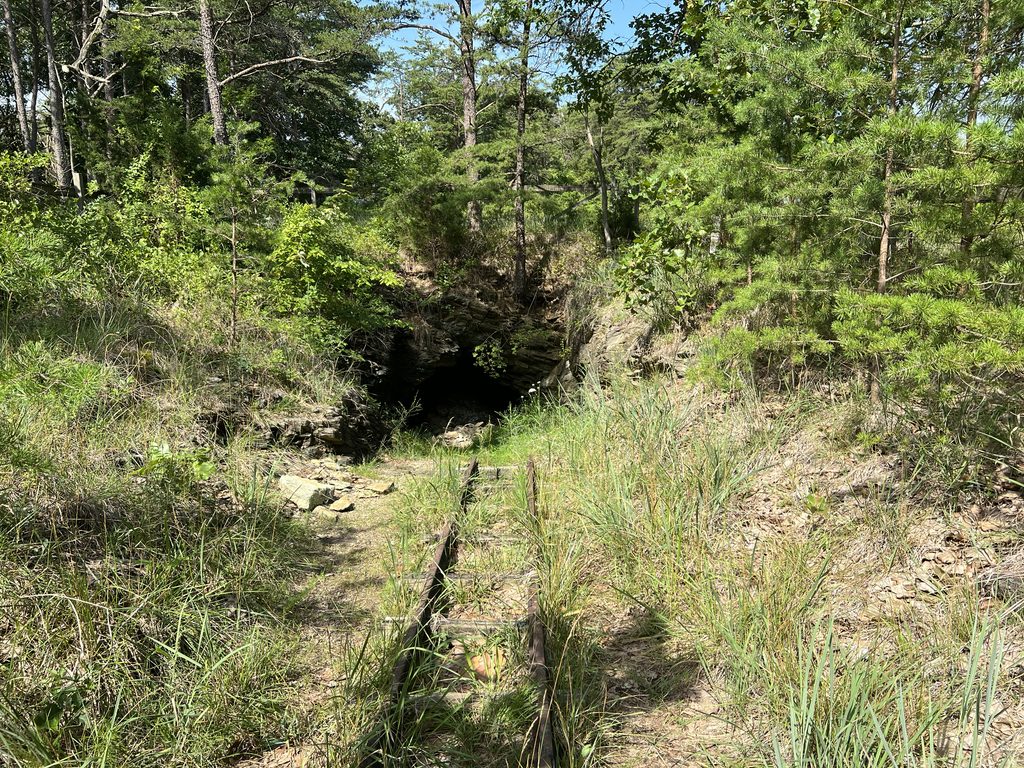
In the late twentieth century, the land containing the old Choate Mine became part of Soldiers Delight Natural Environment Area, managed by the Maryland Department of Natural Resources. The area is protected both for its rare serpentine ecosystem and for its mining history. Today, visitors can walk Choate Mine Trail, which passes right past the still-intact entrance to Choate Mine, complete with some old mining car tracks leading to it. Old test pits, spoil piles, and shallow depressions still mark the landscape for those paying close attention as they walk the trail.
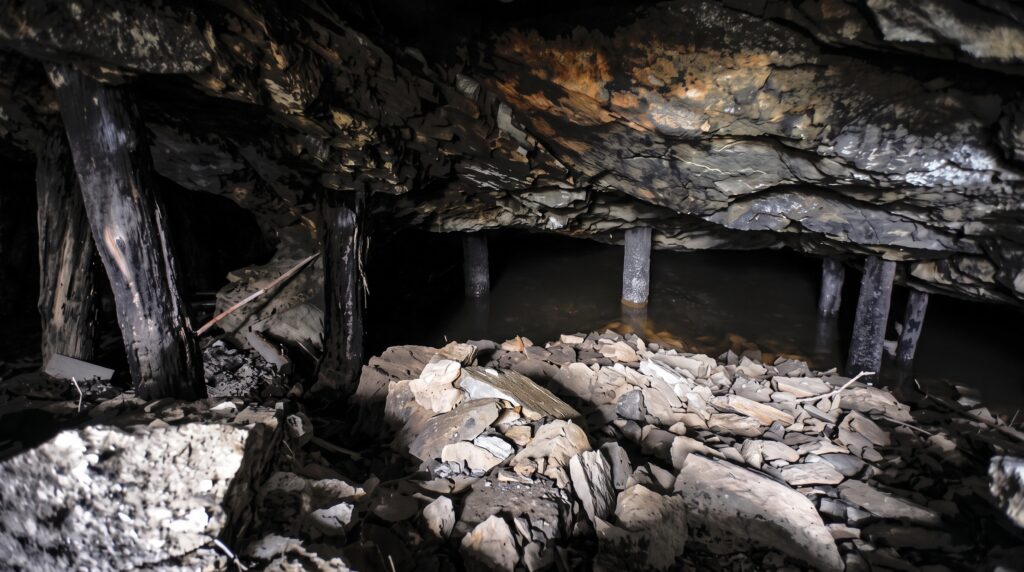
The history of Choate Mine is a small but significant part of Maryland’s industrial and geological story. It reflects the early 19th-century rush to exploit domestic mineral resources, the rise and decline of Maryland’s chromite industry, and the eventual transformation of exhausted mining ground into a protected natural and historical landscape. Choate Mine helps tell the story of how Soldiers Delight briefly became a prominent source of chromium in the United States.