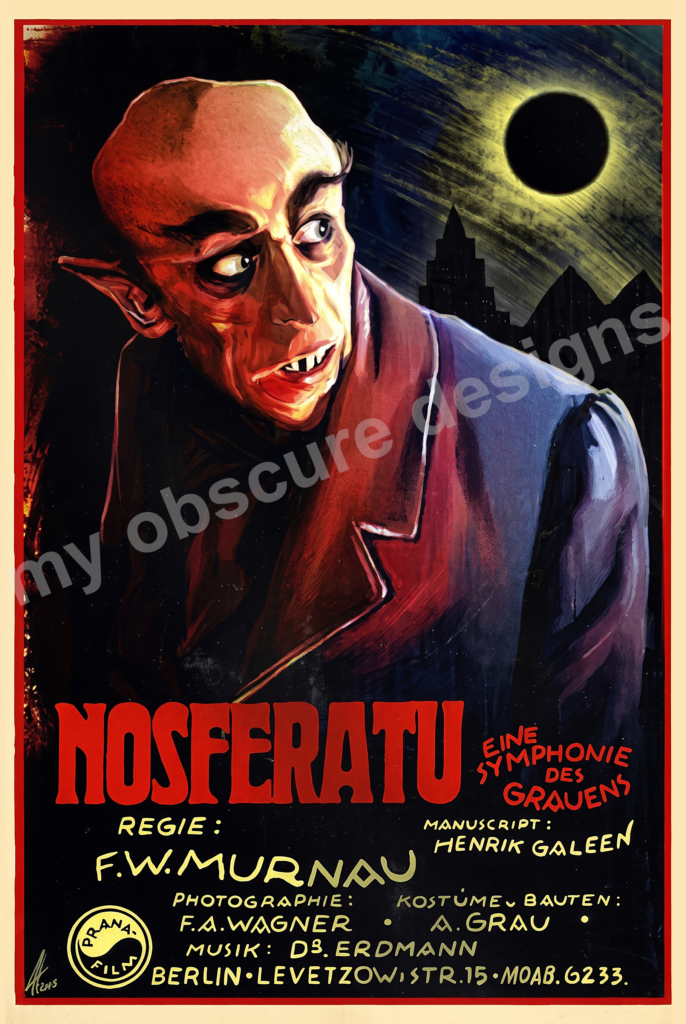
Nosferatu is the first great horror film and the first great adaptation of Bram Stoker’s Dracula. Wear this original German poster art proudly…
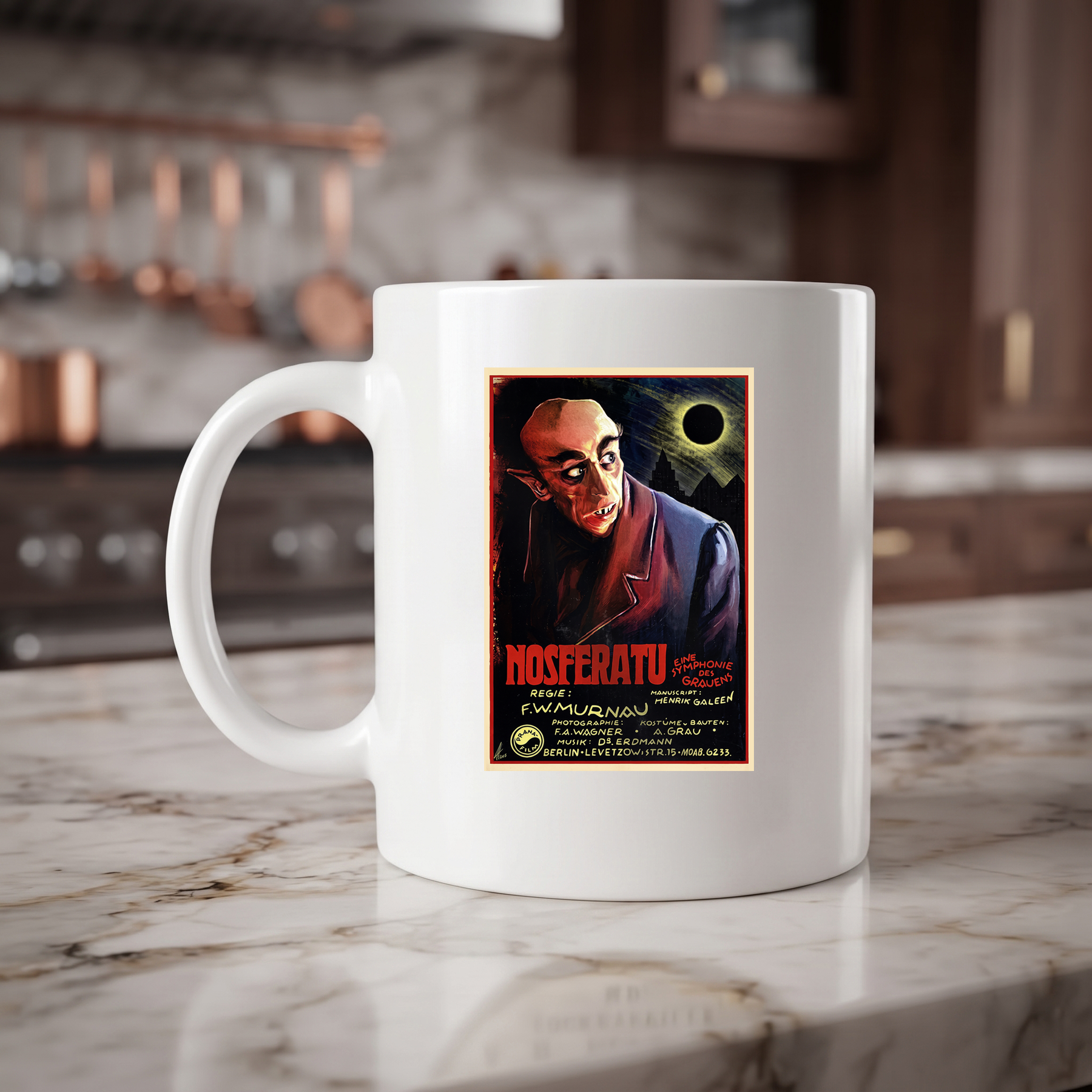
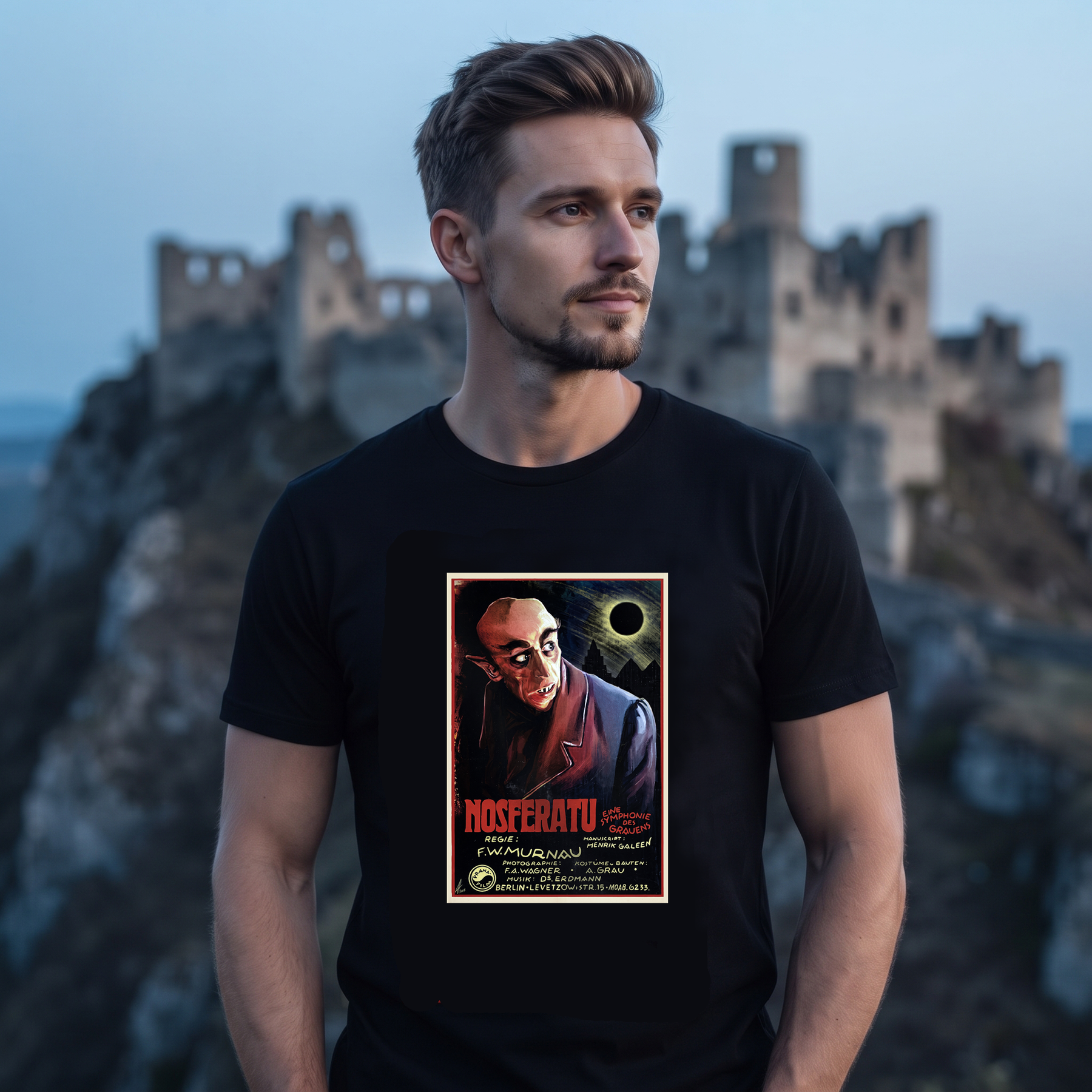
Put this amazing piece of German cinema art on more than 70 high-quality merch items by going right here. Or, peruse dozens of other interesting and unusual designs from My Obscure Designs by going right here.
Nosferatu: The First Great Dracula Film
Nosferatu: A Symphony of Horror (1922), directed by F. W. Murnau, is a landmark of German Expressionist cinema and one of the most influential horror films ever made. An unauthorized adaptation of Bram Stoker’s Dracula, the film changes names and details but keeps the core story: young Thomas Hutter travels to Transylvania to sell a property to the mysterious Count Orlok.
Despite warnings from locals, Hutter discovers that Orlok is a vampire. After seeing a portrait of Hutter’s wife, Ellen, Orlok becomes obsessed and travels by ship to the town of Wisborg, bringing coffins, rats, and plague. As death spreads, Ellen learns that only a pure woman’s willing sacrifice can destroy the monster. She lets Orlok feed on her until dawn, when sunlight destroys him.
Importance in Film History
The film is historically vital for several reasons. It introduced the first major screen vampire, played with terrifying otherness by Max Schreck, whose gaunt, rat-like Count Orlok remains one of horror cinema’s most haunting images. Murnau used expressionist shadows, eerie landscapes, and groundbreaking special effects, such as Orlok’s shadow climbing a staircase, to create a dreamlike atmosphere of dread.
Unlike later suave (and more sexy) vampires, Orlok is a creature of decay and plague, linking vampirism to disease and death. Its visual style influenced countless horror films and filmmakers, from Universal’s Dracula to modern directors.
Copyright Infringement and Near Destruction
The film was almost destroyed due to copyright law. Because Prana Film never secured rights from Bram Stoker’s estate, Stoker’s widow sued for infringement. In 1925, a German court ruled in her favor and ordered all prints and negatives of Nosferatu destroyed.
Prana Film went bankrupt, and for years the movie seemed doomed to vanish. However, prints had already circulated internationally, and copies survived in countries outside the court’s reach. These surviving prints allowed later restoration. Today, the film exists in restored high-definition and can be enjoyed for generations to come.