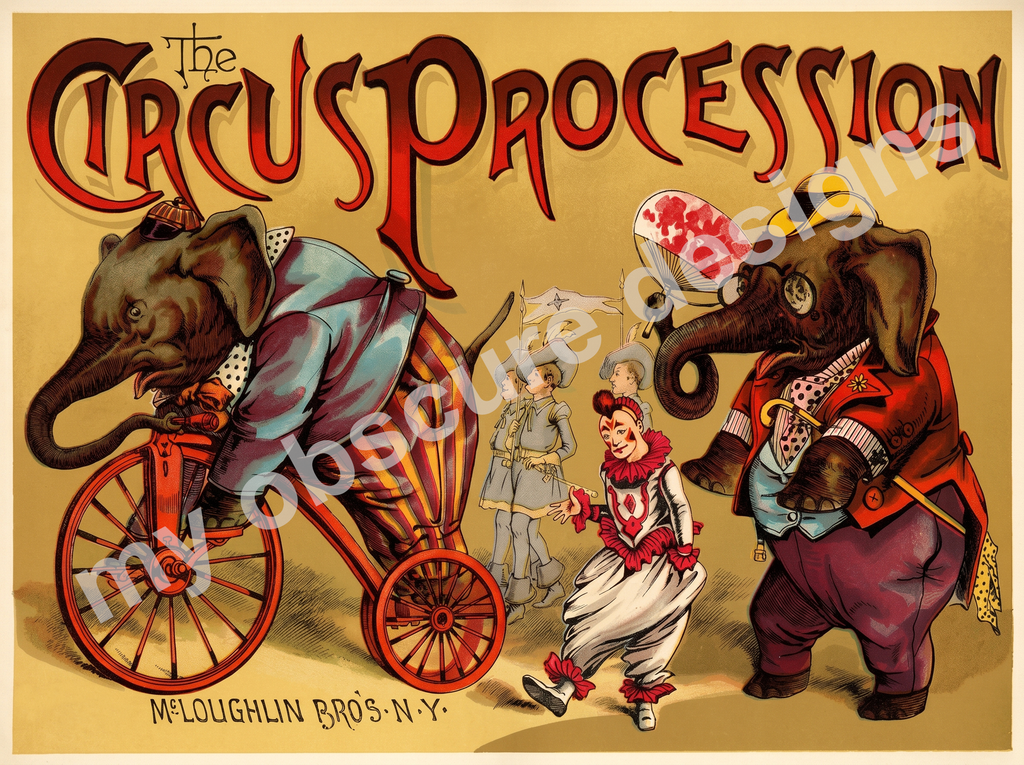
In days gone by, circuses were a source of great excitement to a population with few sources of entertainment. Now, you can display this extremely colorful and vibrant vintage circus poster as a wonderful reminder of America’s past (as well as a beautiful work of art).
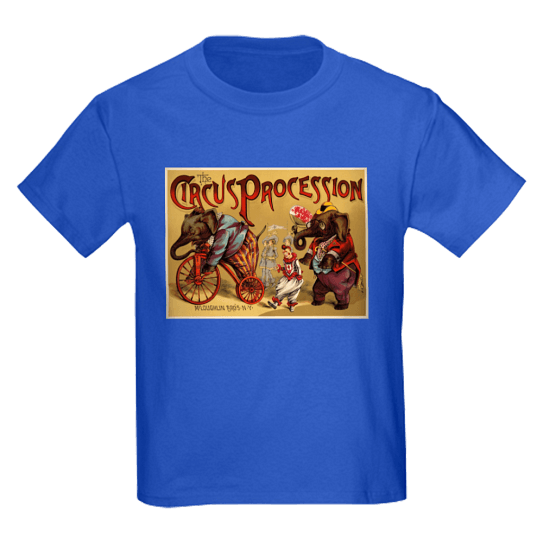
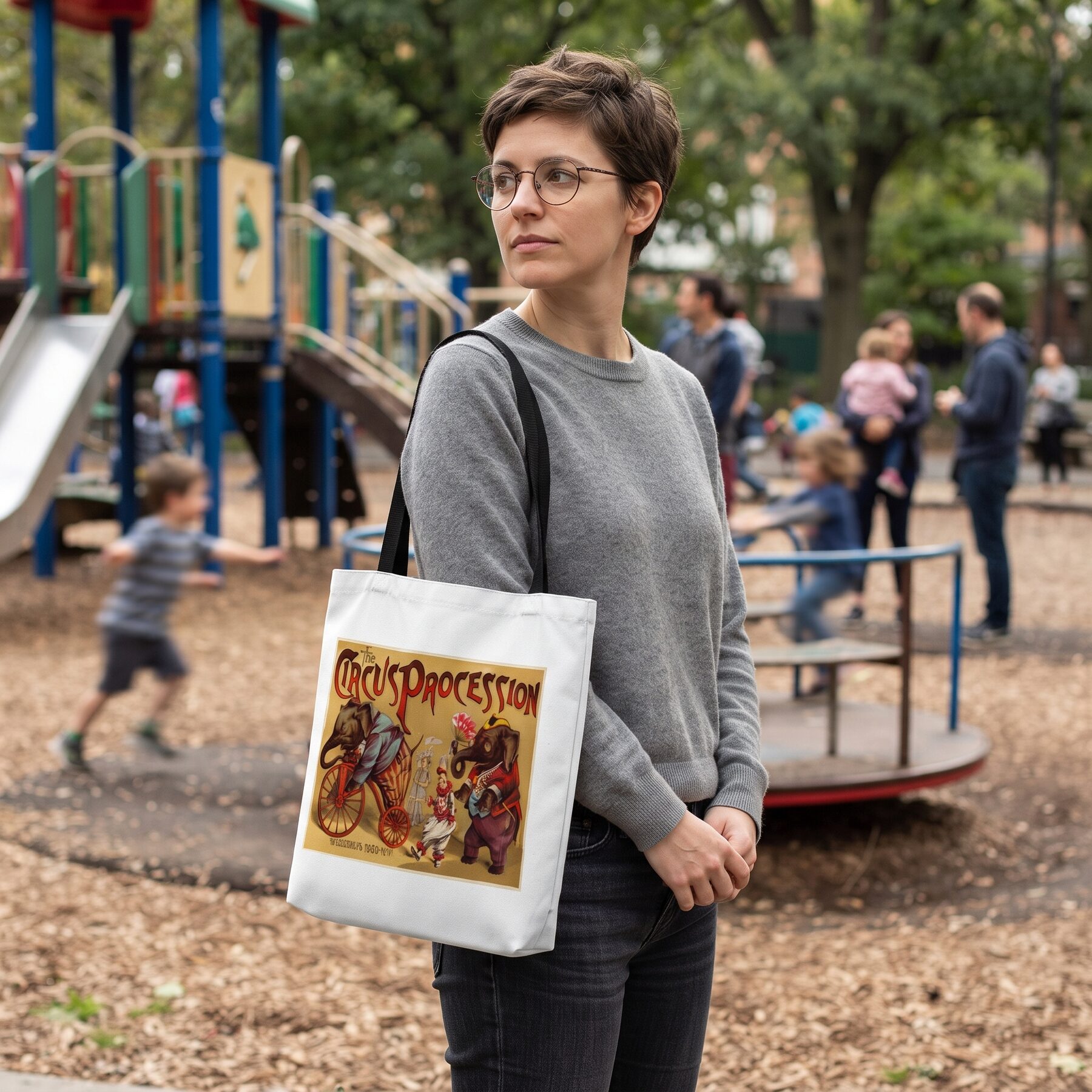
Pursue a wide assortment of high-quality merch emblazoned with this beautiful artwork. They are all available right here. Or, take a gander at dozens of other unique and unusual designs by going right here.
A Look Back at the Circus
In the pre-movie era of the late nineteenth century, the circus was often the most elaborate entertainment Americans would ever see. Before motion pictures spread from peep shows into nickelodeons after 1905, rural and small-town families had few options: an occasional traveling lecturer, a minstrel show, or a county fair.
A circus arrival was so important that schools and businesses sometimes closed for “circus day.” For one shining afternoon, a dusty lot became a place of wonder, offering escape from farm labor, small-town routine, and limited horizons. Seeing a vintage circus poster like the one above no doubt sent thrills down the spines of every child in the late 19th century.
The Rise of the Railroad Circus
Before the Civil War, American circuses were modest wagon shows. After 1865, railroad expansion allowed entrepreneurs to create massive traveling companies that could reach hundreds of towns each season. In 1871, P. T. Barnum partnered with W. C. Coup and Dan Castello to launch a railroad circus carrying exotic animals, performers, and tents.
In the 1880s Barnum joined James A. Bailey to form Barnum & Bailey, “The Greatest Show on Earth.” In 1884, five Ringling brothers started a small show in Baraboo, Wisconsin, and gradually built it into a major rival. After Bailey died, the Ringlings bought Barnum & Bailey in 1907, and by 1919 the combined Ringling Bros. and Barnum & Bailey became the nation’s dominant circus.
A World of Wonder for Rural America
During its golden age, the circus offered spectacular escape. Weeks before arrival, colorful posters plastered barns and store windows, building anticipation. The parade from the rail yard, featuring elephants, gilded wagons, and brass bands, was a free show in itself.
Under the big top, three rings offered simultaneous acts: aerialists, acrobats, clowns, trick riders, and wild-animal trainers. Outside, the midway offered popcorn, lemonade, and sideshows. For isolated rural children, seeing a giraffe, a lion, or a performer from a distant land was as wondrous as any motion picture experience in later years.
The Golden Age and Decline
The early 20th century was the circus’s peak. Ringling Bros. and Barnum & Bailey moved by rail like a traveling city, with hundreds of performers, workers, and animals. Smaller shows such as Cole Bros. also toured. Even as movies spread in the 1910s and 1920s, circuses remained popular because they offered live, communal spectacle.
But by mid-century, competition from talking pictures, radio, and later television, along with the Great Depression and World War II, weakened the big-top model. The deadly Hartford circus fire of 1944 dealt another blow. In 1956, Ringling Bros. and Barnum & Bailey ended its tented era and moved to indoor arenas. The circus survived, but it was no longer the central American entertainment it had been before movies and broadcasting transformed leisure.
In recent years, mounting concerns about animal cruelty also helped deal a death blow to circuses. Today, circuses are mostly just a distant memory for most people. The vintage circus poster above represents a very colorful reminder of how things were a long time ago.